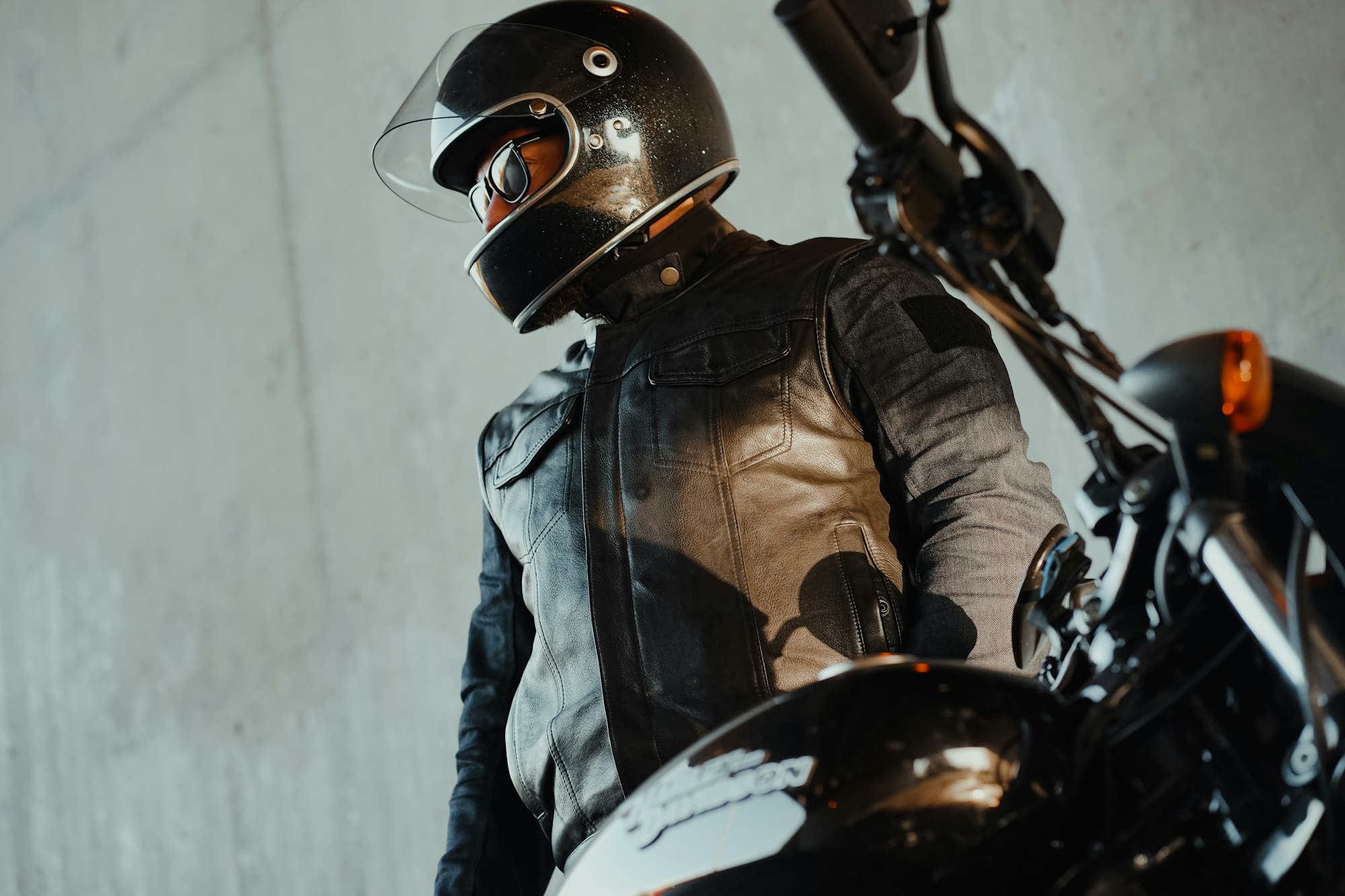
Bike class is a major input into a motorcycle insurance premium and, more importantly, into the coverage gap a standard policy quietly leaves open. The carrier does not price "a motorcycle" — it prices a specific risk class. A liter-class sport bike sits well above the all-bikes median, and supersport riders have much higher driver death rates than riders of other motorcycle types [Insurance Institute for Highway Safety, 2026]. A cruiser sits at or below the median because lower typical speeds and an older rider profile reduce claim severity. Liability-only cover on a dirt bike is cheap, because the bike carries no on-road liability exposure.
The decision bike type drives, though, is the coverage gap — not the premium. A standard motorcycle policy is written around a stock road bike, and anything yours is not creates exposure. A Harley with chrome, bags, and custom paint settles at stock value after a total loss unless those parts are scheduled. A custom build has no clean book value, so an actual-cash-value policy depreciates it to a generic figure that ignores the fabrication. A classic or vintage bike needs an agreed-value policy, or a collector total loss pays a depreciated number far below the bike’s real worth. A dirt bike or ATV needs its own policy: a standard homeowners policy covers an owned off-road vehicle’s liability only on the insured’s own property [Insurance Services Office, HO 00 03 sample homeowners policy (via Insurance Information Institute), 1999]. Read your bike’s guide before you shop the price, because the right question is rarely "what is the cheapest quote." It is "which gap does this bike have, and which policy term closes it."
Why bike type changes your premium and coverage
An insurer does not price a "motorcycle." It prices a specific class of risk, and the bike is the single biggest signal of which class a rider belongs to. Two things move with the bike type. The first is the premium itself. The second, and the one a rider is more likely to get wrong, is which coverage the standard policy quietly leaves out.
Premium first. Sport bikes sit well above the all-bikes median, and supersport riders have much higher driver death rates than riders of other motorcycle types [Insurance Institute for Highway Safety, 2026]. Cruisers sit at or below that median because lower typical speeds and an older rider profile reduce claim severity. Liability-only cover on a dirt bike is cheap, because the dirt bike carries no on-road liability exposure. The headline number a rider sees is mostly the bike talking.
The coverage gap is the part marketing pages skip. A standard motorcycle policy is written around a stock road bike, and anything that bike is not creates an exposure. A Harley with several thousand dollars of chrome, bags, and custom paint settles near its stock value after a total loss unless the owner adds a custom parts and equipment endorsement — list the parts, document them with receipts. A custom build has no clean book value, so an actual-cash-value policy depreciates it to a generic figure that ignores the fabrication. A classic or vintage bike needs an agreed-value policy, where the payout figure is fixed when the policy is written, or a collector total loss pays a depreciated number far below the bike’s real worth. And a dirt bike or ATV needs its own policy. That last one is not a sales angle: a standard homeowners policy covers an owned off-road vehicle’s liability only on the insured’s own property [Insurance Services Office, HO 00 03 sample homeowners policy (via Insurance Information Institute), 1999], so a rider who counts on it away from home has no liability coverage there.
The practical takeaway: read your bike’s guide before you shop, because the right question is rarely "what is the cheapest quote." It is "which gap does this bike have, and which provider closes it."
All bike-type guides
Eleven bike-type guides, each carrying its own coverage-gap analysis and discount list. Start with the one that matches your ride.
| Bike type | Annual range | The deciding coverage question | |---|---|---| | Harley-Davidson | $150–$390 | Is the bike’s chrome and accessory value scheduled? | | Custom motorcycle | No published average | Agreed value vs. actual cash value on a one-off build | | Sport bike | $230–$590 | Theft coverage, and the track-day exclusion | | Cruiser | $140–$360 | Accessory limits and two-up passenger liability | | Touring | $160–$410 | Integrated electronics and trip-interruption coverage | | Dirt bike | $156–$792 | Whether a road policy covers an off-road bike at all | | Classic motorcycle | No published average | Agreed value, and the mileage-restriction trap | | Dual-sport | $120–$310 | Whether physical damage applies off-road | | Vintage motorcycle | No published average | Agreed value on an appreciating collectible | | Scooter | No published average | State displacement thresholds for whether coverage is required | | ATV | $88–$327 | Off-road liability, and the homeowners-policy myth |
The ATV and dirt-bike ranges are ValuePenguin 2026 single-profile samples, liability-only to full coverage [ValuePenguin, ATV Insurance, 2026] [ValuePenguin, Dirt Bike Insurance, 2026]. The Harley, sport-bike, cruiser, touring and dual-sport ranges come from motoinsure’s cost model, the same one behind the cost estimator: minimum to full coverage for a 34-year-old with five years of riding, at national rates, from MoneyGeek’s $141 and $364 national averages [MoneyGeek, Average Cost of Motorcycle Insurance, 2026] scaled by the model’s bike-class factor. Custom, classic, vintage and scooter have neither a published average nor a class factor in the model, so no range is shown. None is a quote. They are presented as ranges because a real premium moves with the state, the rider, the displacement, and the coverage selected. Pull a live quote for your own bike before you treat any number as fixed.
Which coverage gap applies to which bike
Bike types sort into four coverage problems. Knowing which one your bike has tells you what to ask an insurer before you compare prices.
The first is the custom-parts gap, and it applies to Harleys, custom builds, cruisers, touring bikes, and accessorized dual-sports. The bike carries bolt-on value, the chrome, exhaust, audio, bags, skid plates, and integrated electronics that a base policy caps or excludes. The fix is a custom parts and equipment endorsement, documented with receipts and photos, and motoinsure’s custom-parts coverage guide covers exactly how it works. Some insurers build custom-parts coverage into the base policy rather than charging for it as an add-on, so ask each one directly when you quote.
The second is the valuation gap, and it applies to custom, classic, and vintage bikes. These have no reliable book value, or a value that appreciates rather than depreciates. A standard actual-cash-value policy pays a depreciated market figure that can be a fraction of the bike’s true worth. The fix is an agreed-value or stated-value policy, set at purchase and supported by an appraisal. A collector policy is built around an agreed value: the owner and insurer agree on the vehicle’s value up front, and it is covered up to that value without depreciation [Insurance Information Institute, 2024]. The powersports and collector specialists are the insurers that write it.
The third is the off-road coverage-scope gap, and it applies to dirt bikes, ATVs, and dual-sports. A standard road policy is built around public-road use; off-road riding may fall outside it, and a dedicated off-road bike is often excluded entirely. This is the gap riders most often discover after a loss. A dedicated off-road or powersports policy, with the vehicle listed as off-road use, is the reliable answer, and several insurers that write off-road coverage underwrite it.
The fourth is the even-required gap, and it applies mainly to scooters. Some states exempt scooters or mopeds below a displacement threshold from mandatory insurance, so an owner can ride with no coverage and no protection against theft or liability. There is no single national cutoff: the threshold and the exemption itself vary from state to state, so the only reliable way to know is to check the rules with the rider’s own state DMV. The trap here is the opposite of the other three: it is not that a policy quietly leaves something out, but that the rider, finding no legal requirement, buys no policy at all — and then carries the full cost of a theft or an injury claim alone.
A single bike can sit in more than one of these buckets. An accessorized custom Harley has both the custom-parts gap and the valuation gap; an adventure-set dual-sport has the custom-parts gap and the off-road coverage-scope gap. Reading your bike’s guide is how you find every gap that applies, not just the obvious one.
Once you know which gap your bike has, the next move is matching it to a carrier.